
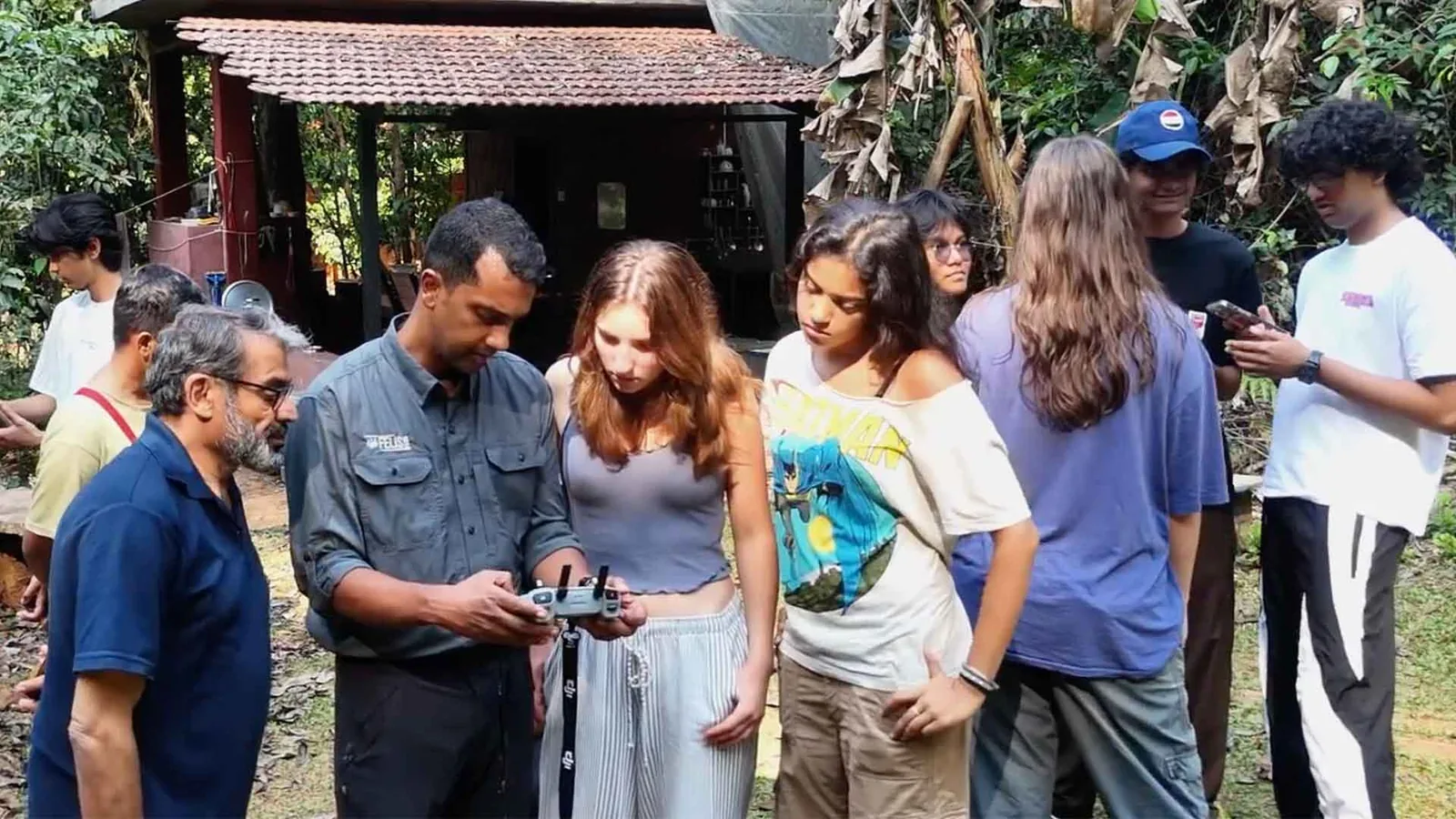
Project Week at MUWCI continues to be one of the most powerful expressions of Experiential Learning, a dedicated period for student-led, project-based learning that bridges the gap between academic theory and real-world application. Designed and executed by first-year students, the programme emphasises student leadership and agency, allowing participants to move beyond the classroom and into diverse communities and landscapes. By drafting their own proposals and managing end-to-end logistics, students explore critical global questions through a lens of personal belief and social responsibility, creating a portfolio of work that balances long-standing community partnerships with fresh, innovative student initiatives. It is rooted in what they want to explore, what they believe in, and the questions they are sitting with. This year’s portfolio reflects that balance of continuity and new energy.
Community Partnerships and Cultural Immersion
Students participated in cultural immersion through the Tibetan Buddhism Project in Mundgod, Karnataka, engaging with monastic life and exploring themes of exile and philosophy. In Kalinga, Karnataka, the focus shifted to experiential fieldwork, where students joined workshops and collaborative projects with local partner organisations. Furthermore, students explored alternative education models through strategic partnerships with The Learning Centre in Goa and Creative Learning for Children in Lonavala, emphasising community-based learning as a tool for social change.
Student Leadership in Action: Grassroots Impact and Sustainability
In Jodhpur, students practised grassroots leadership through a collaboration with the Sambhali Trust, focusing on women’s empowerment and social equity. At the Centre of Resilience in Bihar, students focused on environmental sustainability, engaging with rural development and innovative climate solutions like floating houses. To understand urban social impact, students worked with Project Mann, Dharavi Diary, and the National Association of Disabled Enterprises (NADE) in Mumbai, gaining hands-on experience in mental health advocacy, storytelling, and inclusive entrepreneurship.
Empowering Local Communities through Sports and Fitness
Meanwhile, Kriya Shivaji (AMK Forts) in Nashik integrated trekking, history, and conservation, blending physical challenge with heritage stewardship. Through this initiative, MUWCI students demonstrated peer leadership by mentoring girls from local government schools, facilitating sports and fitness programs to prepare them for demanding hikes. Beyond the physical accomplishment, this community engagement fosters deep confidence and encourages local youth to pursue further adventure and lifelong learning.
The Framework of Project-Based Learning: Planning and Ethics
What sits beneath all these projects is a rigorous project management framework led entirely by first-year students. From drafting detailed proposals and stakeholder coordination to budgeting, risk assessment, and carbon footprint analysis, and defining meaningful deliverables, students own the lifecycle of their projects end-to-end. This experiential education model is anchored in the United Nations Sustainable Development Goals (SDGs), IB CAS (Creativity, Activity, Service) learning outcomes, and UWC values. By defining clear deliverables, students ensure that community engagement is a deliberate, high-impact learning experience rather than a passive observation, or something accidentally experienced.
From Service to Sustained Commitment: The Long-Term Impact
What makes Project Week even more powerful is that it does not end when the buses return to campus. It often evolves from short-term service into sustained social commitment. A prime example is the partnership with the National Association for the Blind in Lucknow. What began as a one-week immersive experience transitioned into Pragya Chakshu, a student-led Triveni initiative. Students taught themselves how to read and write Braille, spent months developing content, and eventually created a 50-story Braille book for a blind school.
This journey from initial exposure to sustained commitment and social entrepreneurship captures the essence of the MUWCI experience: planting seeds of change that students choose to nurture into lasting legacies. Whether through new initiatives, sustained partnerships, or Trivenis that grow from lived experiences, Project Week fuels long-term engagement. It is not just a programme. It is how belief turns into action.
Author: Manish Thapar, Experiential Learning Head
MUWCI Project Week is a student-led experiential learning programme where first-year students work with communities across India to develop leadership, collaboration, and real-world problem-solving skills