
A Student’s Journey Through Amritsar and Mussoorie
The MUWCI Experience India Week 2026
Experience India Week was one of the most thought-provoking experiences I've had at MUWCI so far. Travelling through Amritsar and Mussoorie exposed me to different aspects of India's history, culture, and geography, but it also made me confront how much I had not understood about the region I live in. I returned with a greater appreciation for the people and places we encountered, alongside questions about colonialism, Partition, cultural identity, and the ethics of tourism.
This reflection is LONG. I didn't realise until I had to proofread it right now how much I learned and thought about at EIW but it makes me so happy that i got to write it down when it's still fresh in my mind.
Amritsar
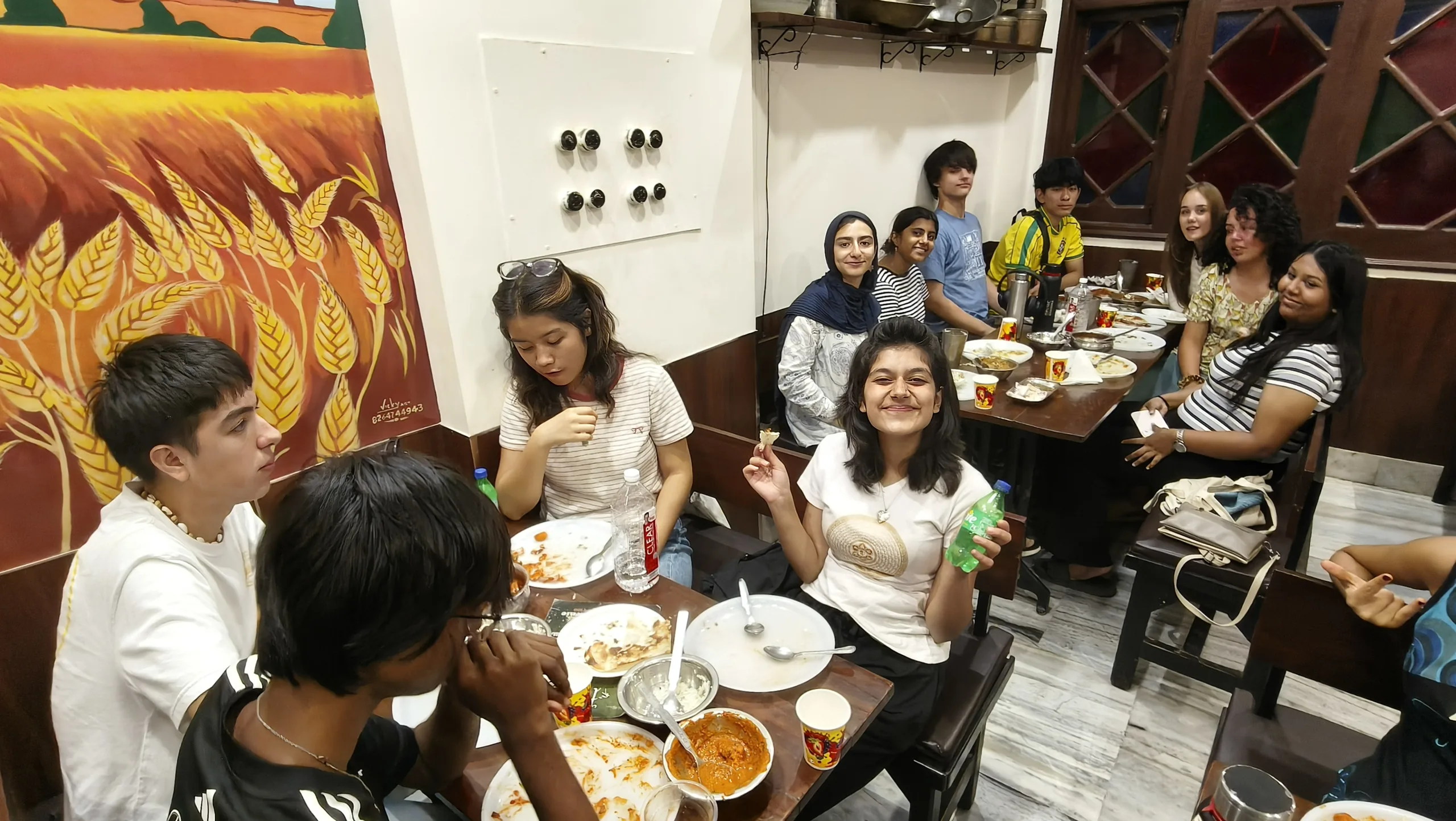
In Amritsar, we visited the Golden Temple, learned about Sikhism, and saw the temple both during the day and at night. Although both visits were beautiful, I found the night more fun, or just more immersive. We also participated in community service at the Golden Temple, helping make rotis and serving food. I loved being part of this process; there is something that makes me bone-happy (I don't know if that's the direct translation from Nepali to English for this word) about contributing to a space where people gathered to eat, regardless of their backgrounds. It was an opportunity to participate in a tradition of service rather than simply observe it as a visitor.
Our visit to Jallianwala Bagh was another significant experience. It made me come face to face with the violence of British colonial rule and the ways in which colonial power was maintained through fear, punishment, and the suppression of people who resisted it. What disturbed me was the cruelty inflicted on people whose lives and autonomy were already being controlled by a foreign power. The visit also helped me connect colonialism to the wider question of how empires exercised power over the people they ruled.
However, the Partition Museum affected me in a different way. As a Nepali person, I have always been conscious that Nepal's history differs from that of its neighbours, particularly because Nepal was not directly colonised by the British in the same way as India. I knew that Partition had happened, that millions of people had been affected, and that it was a terrible event. Yet these facts had existed in my mind as distant historical information rather than as something I could begin to understand emotionally.
The museum changed that. Through personal stories and accounts of what people experienced, Partition became much more than a date or a political decision. It became a collection of individual lives disrupted by violence, displacement, and separation. I began to understand how inadequate it was to simply say that Partition happened and people died without considering what those statements actually meant for the people involved. I think it was mainly my education system not mentioning the partition as more than just a footnote — and that too, only when talking about Nepal's own political revolutions — that made me think in such a closed-minded way, and it bothers me a lot, but there's nothing to do but learn more and be less ignorant of the world around me.
It also made me think about how Partition's consequences extend beyond the borders of India and Pakistan. The division devastated and tangled up and marred families, communities, and identities across South Asia, and it's not just Punjab; it's Bengal and Sindh and every single person who did nothing wrong but just be born in a place that the British would part, years before the event even happened. How was anyone to know? How could anyone have stopped it or, at the very least, minimised the violence, the hurt, the sheer absurdity of millions dying because of the birth of a nation, a liberation that was supposed to free them all?
And its effects continue to influence relationships between countries today, and that's quite possibly the worst part of the thought for me. I realised that I had been overlooking a major part of regional history simply because I had not directly encountered it before, and isn't that a thought: it feels almost just a step away from "out of mind, out of sight", and that's not how I want to view the world at all.
At the Wagah Border, these thoughts became even more immediate; I would go as far as to say they were dragged to the forefront of my mind when we were trying to get a single glance of the procession from over the shoulders and heads of hundreds, if not thousands, of people gathered at the Indian side to watch the procession. Watching the ceremony and seeing the crowds gathered on the Indian side made me think about the arbitrary nature of the divisions that separate people who once lived within the same region. I mean, what are the chances that half the people waving the Indian flag in front of me had some distant second cousin, half-removed, someone's grand uncle or someone of that sort who had to flee and who almost died in the violence the partition brought on the other side of the border? How many people had their family wells or springs or even old family houses over on Pakistan? How many of them even knew of it, because how many even survived to tell their stories?
And no, don't get me wrong, I see it as a show of patriotism as it is, but that doesn't overshadow the sadness for me, personally. It doesn't make me think any less about how crazy it is that one line and two religions and millions of people on each side makes it so difficult or so impossible for two countries to reconcile; it's not even "become one country", that is a crazy thing to ask or want, considering why the nations were born and in what conditions, but it's more of a wistful hope about the families that had to leave or separate because of religion when these same religions were existing peacefully for millenia, or at least, more peaceful than riots and murders and religious genocide on both parts in less than a week's notice. Could we not at least be friendly? Could there not be more than just diplomatic threats?
But I must also say, I know I'm an outsider here. I might be South Asian, but I'm not the same type of South Asian that faced the partition, or heard eighty years of news after it. I understand where a lot of this Pakistan versus India rhetoric comes from to a certain extent, but I haven't yet understood it all, and I can't say I will be able to understand it fully any time soon, either. The simple truth here is that most of my knowledge comes as a bystander, a visitor to museums, a person who stayed in Punjab for no more than four days, and so my opinion is that of a child; I know nothing but the basics, and my brain loves to draw conclusions. It's two whole nations, man; it's a whole subcontinent! It really is NOT that easy or black and white. I say things like "why can't we just hold hands and be friends, guys?" because that's so hopelessly optimistic, and in most cases, that's not how the world works. But god, how I wish it did.
We had a crystal-clear sky that day, and we got to see the other side of the border; right next door was Pakistan. Nothing different in the soil; maybe there even was a blade of grass that got to sway freely through India and Pakistan as the wind pleased. I kept thinking about Lahore and Amritsar, and this might eb a fundamental characteristic of mine: the humanisation of things that aren't really alive, and aren't even human, but they called them sister cities, you know? Sister cities of Lahore and Amritsar, where Lahore was home to films and media and the greatest arts produced in South Asia at the time, and Amritsar was her sister, a couple dozen kilometers away as a sanctuary and holy site. Cities geographically so close to one another, and definitely not far behind in proximity when we look at history, but separated by an international border created during Partition. A border created, no less, by a man who hadn't even SEEN the cities. It was difficult to even think about how near they were physically, given how complicated crossing between them had become.
I found myself wondering about the people whose families were separated, whose homes ended up on the other side of the border, and whose lives were changed by a line they had no control over. I also wondered what Partition looks like from the Pakistani side. What stories are told there? How do people remember the same events? Does Pakistan have a museum that documents Partition through the experiences of its own communities? These are questions I would like to explore further, because I do not think it is possible to understand such a complicated historical event through only one national perspective.
Mussoorie
Mussoorie introduced me to a different setting and another way of thinking about colonial history. I loved the mountains, the food, and the atmosphere of places like Landour and Lal Tibba. Visiting Ruskin Bond's house was particularly exciting, and the surrounding landscape often felt strangely familiar to me. Some aspects of the region reminded me of Nepal, especially the mountains, the food, and the cultural connections I noticed within the Tibetan community.
At the same time, Mussoorie felt so different from home. Its colonial architecture and history gave certain places an unfamiliar atmosphere. I learned more about how the British developed hill stations as retreats from the heat of the plains, recreating environments that felt comfortable to them while they governed a country that was not theirs. This made me question the relationship between the beauty of these places and the history of how they were developed.
Mussoorie was picturesque, peaceful, and easy to enjoy as a tourist. Yet I could not completely separate that beauty from the colonial structures that had shaped the town. The same empire whose actions I had been thinking about in Amritsar had also created spaces of comfort and leisure for its own people in the hills. While some people lived under colonial rule and suffered its consequences, others could retreat to places designed to make their lives more pleasant.
This contrast made me question whether enjoying such places is ethically complicated. Is it possible to appreciate colonial architecture and the landscapes surrounding it without overlooking the exploitation that formed part of their history? I do not think that enjoying a place automatically means endorsing its past. However, I do think that appreciating a place responsibly requires acknowledging how it came to look the way it does, whose comfort it prioritised, and whose experiences might have been excluded from the stories told about it.
I also visited Lal Tibba, where we met a Nepali woman who shared information about the area's history and Tibet. I was fascinated by what I learned about the Tibetan community, including its history and continued cultural presence in the region. Visiting Happy Valley and Dalai Hills, eating thukpa and momos, and encountering traditions that reminded me of communities in Nepal made me feel unexpectedly close to home.
I particularly noticed similarities with communities such as Tamangs, Sherpas, and Lamas, although I also recognised that Tibetan communities are diverse and cannot simply be treated as identical to the communities I know from Nepal. These encounters reminded me that cultural and historical connections do not always follow national borders. Sometimes, a place can feel familiar because of shared traditions, migration, language, food, or histories that connect people across countries.
Given the difficult circumstances Nepal has been experiencing, these moments of familiarity were especially meaningful to me. I found myself missing home, and the food made that feeling stronger. Experiencing a different region while recognising elements of my own culture helped me appreciate how identity can be both deeply rooted in a particular place and connected to a much wider region.
One of my biggest takeaways from EIW was the realisation that every place contains far more history than a visitor can understand during a short trip. I became increasingly aware of how little I knew about British India, and I wanted to learn more about the systems, decisions, and individuals that shaped the region.
During my independent travel in Mussoorie, I came across an old railway ticket station and became interested in the history of railway development in the area. This led me to wonder about historical railway proposals, why some projects were never completed, and how political decisions and corruption might have influenced infrastructure development. I want to research these questions further rather than treat my initial observations as established explanations.
I also began thinking about the different ways colonialism shaped infrastructure and movement across the region. Nepal does not have the same railway network as India (we don’t really have trains), and seeing trains and railway infrastructure during the trip made me curious about the historical decisions behind these differences. I would like to understand how geography, economics, political interests, and colonial priorities influenced which places were connected and which were not.
At the same time, travelling made me more aware of practical challenges. The heat in Amritsar exhausted me, and I struggled with my finances after my ATM card stopped working and I eventually ran out of money in Mussoorie. I regretted not being able to buy souvenirs for my Wada's fridge, especially because I had wanted to bring something back from the places we visited. These difficulties were frustrating, but they also reminded me that independent travel requires preparation, budgeting, and flexibility. There’s so much in the travel that I got to experience and there’s so much more I spent my time on rather than just buying things, and so I think it was definitely worth the small struggles.
Overall, Experience India Week taught me that travelling is not simply about visiting beautiful places or learning interesting facts. It can also be an opportunity to question what we think we know, confront uncomfortable histories, and recognise the people whose experiences are often missing from familiar narratives. I returned from Amritsar and Mussoorie with a deeper interest in South Asian history and a stronger desire to understand the relationships between colonialism, national identity, and cultural memory.
Learning through experience
Most importantly, I learned that understanding history requires more than knowing what happened. It requires asking whose stories are remembered, whose perspectives are missing, and how the past continues to shape people's lives. I hope to continue exploring these questions, particularly through the histories of Nepal, India, and Pakistan, because our region's interconnected past deserves more attention than I have given it so far.
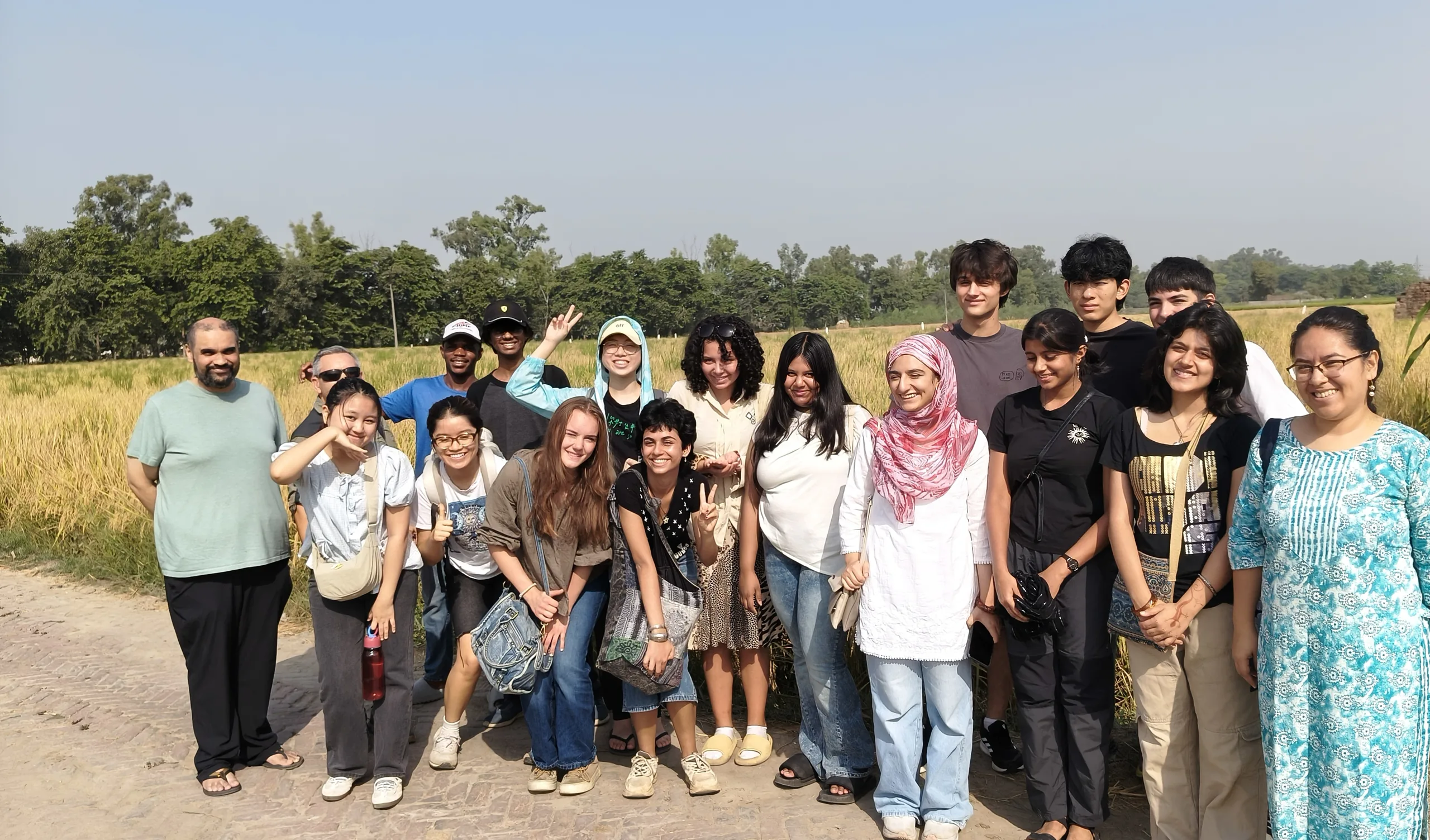
Experience India Week gives students an opportunity to explore India's history, culture, and communities through travel and firsthand experiences
Visits to Jallianwala Bagh and the Partition Museum helped the student reflect on British colonial rule, the human cost of Partition, and the lasting impact of historical events on families and communities.